
DATPOL / ELECTRICAL INSTALLATIONS
Electrical installations. From design to long-term operation.
We design, install and upgrade electrical systems for businesses, industry and public bodies in Poland. Power distribution, machine supplies, lighting and testing are coordinated with documentation and a site maintenance plan.
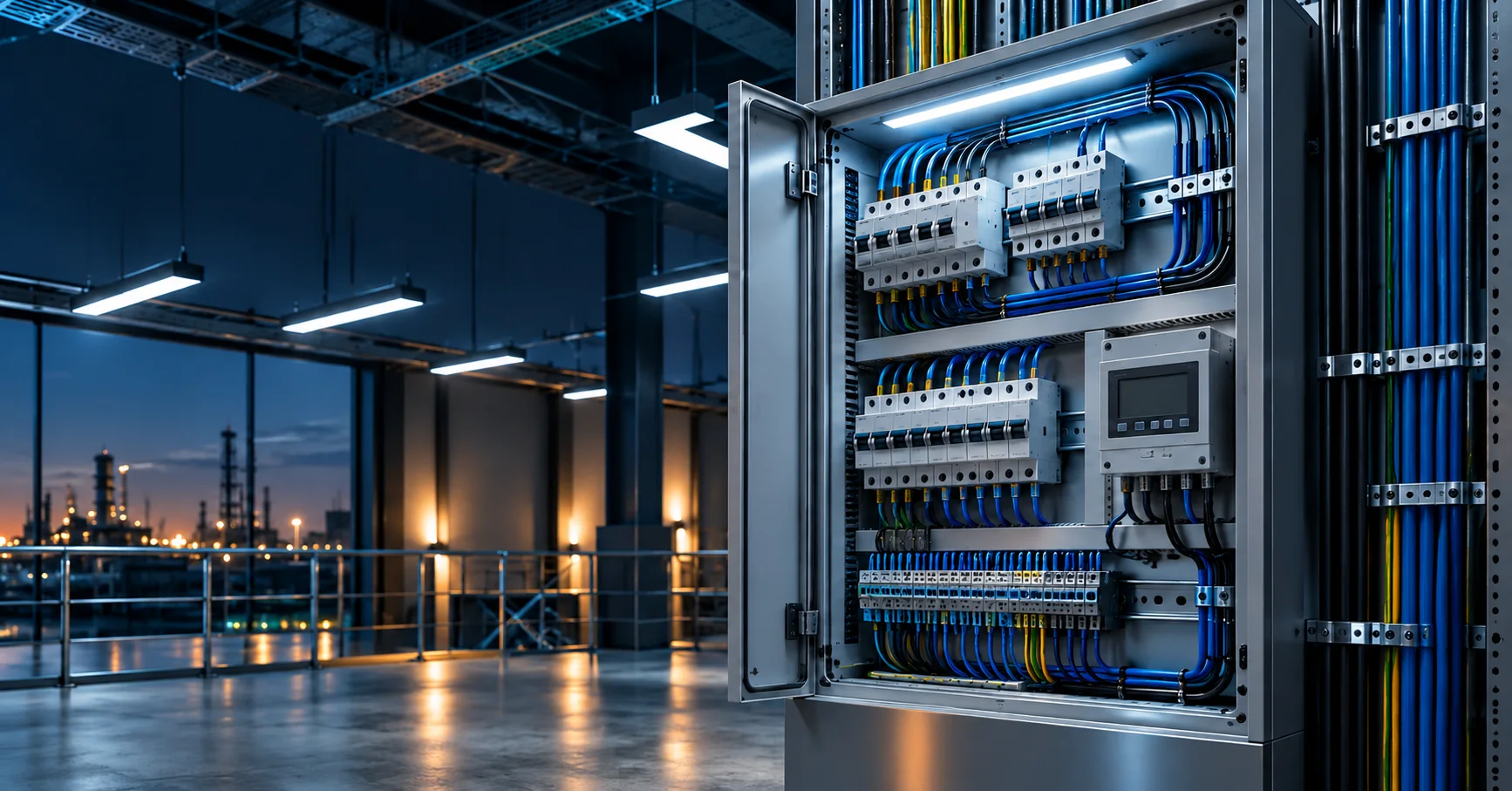
Before investment
Survey, load assessment, design and agreed responsibilities.
During delivery
Work coordination, installation, measurements and functional tests.
After commissioning
Documentation, monitoring, inspections and future upgrades.
Jump to the scope you need
- Survey, concept and electrical design
- Installations for factories, offices, warehouses and public buildings
- Switchboards, distribution boards and power distribution
- Protection against electric shock and protective device selection
- Cable routes, fire stopping and installation quality
- Normal lighting, emergency lighting and controls
- UPS, generators and automatic transfer — continuity of supply
- Machine supplies and automation interfaces
- Submetering, energy monitoring and DATPOL Control
- Solar PV, battery storage and electric vehicle charging
- Sites requiring specialist design
- Electrical and fire safety coordination
- Upgrading an operating site
- Initial verification, diagnostics and test reports
- Periodic inspections and ongoing maintenance
- What is included at handover?
- Qualifications, responsibility and work organisation
- Legislation and the 2026 transition
- Technical standards
- Frequently asked questions
01 / DATPOL
Survey, concept and electrical design
We start with how the site operates, planned expansion and critical loads. Electrical design considers automation, ventilation, IT and fire safety interfaces. Responsibilities and the required design documentation are agreed before installation begins.
- Survey, drawing review and identification of the TN, TT or IT earthing arrangement.
- Load schedules, diversity, starting currents and capacity for future expansion.
- Fault calculations, cable sizing, voltage drop and protective device coordination.
- Cable routes, fire compartments, maintenance access, environmental conditions and approvals.
- Design by professionals holding the required Polish construction qualifications where applicable; agreement on statutory procedures.
02 / DATPOL
Installations for factories, offices, warehouses and public buildings
We install new systems and alter existing circuits around the process, operating hours and site access. The agreed scope may cover a complete installation or a defined stage of an upgrade.
- Main and submain distribution, socket circuits, fixed equipment and process loads.
- Supplies for production workstations, kitchens, pumps, ventilation, refrigeration and IT.
- Offices, hotels, retail premises, public buildings and technical facilities.
- External cabling and supplies for gates, car parks and outdoor equipment.
- Circuit identification, organised routes, distribution board schedules and as-built records.
03 / DATPOL
Switchboards, distribution boards and power distribution
An assembly must be assessed as a complete system. Enclosures, devices and connections are selected for loading, fault conditions, temperature and intended operation. Alterations require an assessment of their effect on the original assembly.
- Main, floor and process distribution boards, including essential power circuits.
- IP/IK ratings, spare space, ventilation and operating access.
- Selectivity, breaking capacity, surge protection and electrical monitoring.
- Design verification and routine verification under the applicable parts of PN-EN IEC 61439.
- Single-line diagrams, device schedules, identification, instructions and applicable assembly documentation.
04 / DATPOL
Protection against electric shock and protective device selection
Protection is selected for the earthing arrangement, prospective fault currents and load characteristics. Drives, chargers and UPS systems require consideration of current waveforms and manufacturer instructions. Installing an RCD alone does not demonstrate effective protection.
- Basic protection, fault protection and additional protection where required.
- RCD/RCBO, overcurrent protection and isolation selected for the circuit.
- Protective conductor continuity, bonding and automatic disconnection conditions.
- SPD coordination with lightning protection and equipment withstand levels.
- Assessment of PEN separation, legacy two-wire circuits and staged upgrade options.
05 / DATPOL
Cable routes, fire stopping and installation quality
Routing affects current-carrying capacity, maintainability and fire performance. We coordinate with other building services and establish cable and support requirements.
- Cable trays, ladders, conduits and busbar trunking selected for the environment and loading.
- Cable grouping, ambient temperature, mechanical loads and electromagnetic compatibility.
- Cable reaction-to-fire performance and product documentation appropriate to the application and applicable rules.
- Fire-stopped compartment penetrations using complete, appropriately classified systems.
- Safety circuits: operating duration, supply arrangements and supports established in the design.
06 / DATPOL
Normal lighting, emergency lighting and controls
Lighting design addresses working conditions and use rather than luminaire wattage alone. Visual comfort is considered alongside maintenance, cleaning and zone controls.
- Factories, workstations, offices, circulation routes and outdoor areas.
- Illuminance, uniformity, glare, colour rendering and task-specific requirements.
- LED upgrades with agreed calculations and measurements.
- DALI control, schedules, occupancy sensing and daylight use.
- Emergency and escape lighting, monitoring panels and central batteries within a separately designed scope.
07 / DATPOL
UPS, generators and automatic transfer — continuity of supply
We establish which loads can wait for a generator to start and which require uninterrupted support. Autonomy and transfer arrangements follow process needs and actual loads.
- Identification of critical, priority and interruptible loads.
- UPS, generator, maintenance bypass and automatic transfer selection.
- Starting currents, overloads, earthing and protection under standby supply.
- Interlocks preventing unintended energisation of the network or an isolated circuit.
- Supply failure and restoration tests, load tests and agreed operating procedures.
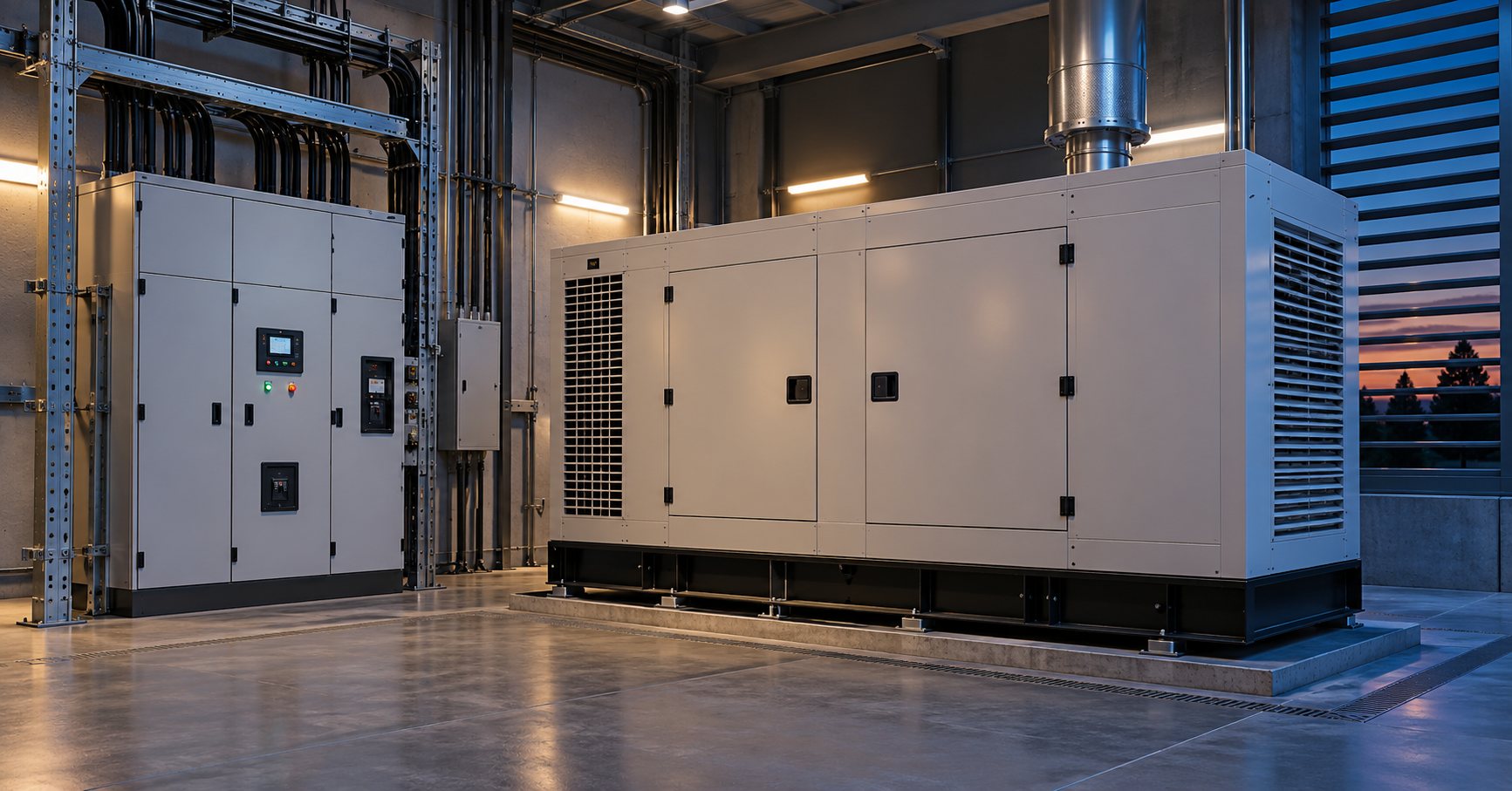 Explore industrial backup power and generator hire
08 / DATPOL
Machine supplies and automation interfaces
When moving a production line or adding machinery, we assess the supply installation and manufacturer requirements. The boundary between building services, machine equipment and safety functions is explicitly agreed.
- Supplies for motors, drives, pumps, compressors and process equipment.
- Maintenance isolation, status indication and agreed signal interfaces.
- Interference, screening, protective conductors and reactive power compensation.
- PN-EN 60204-1 requirements where work covers electrical equipment of machinery.
- Changes to safety functions and machinery conformity assessment as a separately defined responsibility.
09 / DATPOL
Submetering, energy monitoring and DATPOL Control
Metering identifies where costs arise and helps verify upgrade results. We define measurement points for buildings, tenants, production lines or groups of loads, together with clear access rules.
- Energy meters, network analysers, instrument transformers and device communications.
- Consumption history, peak demand, reactive energy, imbalance and agreed power quality analysis.
- DATPOL Control integration for available data: charts, alerts, reports and assigned-site views.
- Interfaces to automation and metering solutions agreed before implementation.
- Billing requires assessment of metrological rules and meter suitability; a portal reading alone does not constitute a billing system.
10 / DATPOL
Solar PV, battery storage and electric vehicle charging
New sources and loads change installation operating conditions. We assess available capacity, connection arrangements, protection, fire safety interfaces and effects on the rest of the site.
- Agreed AC/DC installation work and infrastructure for PV and battery storage.
- Assessment of island operation, source transfer and prevention of unintended energisation.
- EV charging circuits, load management and device-specific protection.
- Network operator requirements and applicable connection procedures.
- Technical supervision and fire safety approval obligations assessed for the specific installation.
11 / DATPOL
Sites requiring specialist design
Operating conditions may require additional protection and specialist approvals. We establish these requirements before pricing rather than applying a standard office solution.
- Cold stores, wet locations, wash facilities, agricultural premises and corrosive environments.
- Medical locations: classification and applicable PN-HD 60364 part 7-710 requirements.
- Explosive atmospheres: zone documentation, Ex selection and applicable PN-EN IEC 60079 parts.
- Construction sites, temporary premises and outdoor installations.
- Server rooms and infrastructure with agreed redundancy and access control.
12 / DATPOL
Electrical and fire safety coordination
Electrical work is coordinated with the fire safety design and cause-and-effect arrangements. Isolation must account for alternative sources and equipment required to operate during a fire.
- Fire emergency power isolation as an actuation, switching and indication system suited to the site.
- Interfaces with PV, UPS, generators, storage and automatic transfer.
- Supplies to fire safety equipment with appropriate cable routes and supports.
- Fire alarm and technical monitoring interfaces established by the design.
- Functional testing, status confirmations and documented results.
13 / DATPOL
Upgrading an operating site
Work is planned around permitted outages, access and process risks. Downtime reduction is assessed after surveying the installation; not every change can be carried out without isolation.
- Circuit survey and identification of critical load supplies.
- Staged schedule, outage windows and temporary power where appropriate.
- Isolation, prevention of reconnection and proving dead procedures.
- Post-alteration circuit verification and an agreed return-to-service plan.
- Updates to drawings, labels and instructions after each stage.
14 / DATPOL
Initial verification, diagnostics and test reports
Handover includes inspection and tests appropriate to the installation. Results include an assessment, scope and limitations, with records identifying the tested circuit and relevant conditions.
- Protective conductor and bonding continuity, and insulation resistance.
- Automatic disconnection and RCD operation checks appropriate to the system.
- Earthing, polarity, phase sequence and required functional tests.
- Lighting measurements, power quality analysis and thermal imaging as additional scopes.
- Reports identifying circuits, instruments, personnel, results, assessment criteria and defects.
15 / DATPOL
Periodic inspections and ongoing maintenance
Polish Construction Law requires electrical and lightning protection installations to be inspected at least every five years within the scope of Article 62(1)(2). This includes connections, equipment, protective measures, insulation and earthing. It is not a universal interval for every maintenance activity.
- Shorter intervals consider environment, condition, instructions and risk assessment.
- Additional checks after faults, flooding, fire or alterations depend on the circumstances.
- Defect register, repair priorities and recommendations for continued use.
- Records for the property manager and agreed assistance with required building log entries.
- DATPOL CARE: inspection schedules, maintenance plans and contractual response arrangements.
16 / DATPOL
What is included at handover?
Documentation forms part of the agreed scope. Before quotation, we establish what will be created, what must be updated and which information must be supplied by the client or equipment manufacturer.
- As-built drawings, distribution board schedules and circuit lists.
- Inspection, measurement and agreed functional test reports.
- Equipment documentation, declarations and applicable product instructions.
- Defects, limitations, recommendations and follow-up dates.
- Operator briefing, safe isolation arrangements and agreed configuration handover.
17 / DATPOL
Qualifications, responsibility and work organisation
Personnel and working arrangements are matched to the task. Polish operation or supervision qualification certificates do not replace construction qualifications required for regulated professional functions.
- Verification of equipment groups, voltage ranges and authorised activities, including inspection and testing.
- Article 62 inspections by persons authorised under Polish law, including appropriate supervision qualifications for electrical inspections.
- Clear responsibilities for the client, designer, installer, assembly manufacturer and maintenance team.
- Operating instructions, worksite preparation and work authorisation arrangements.
- Live working requires separate procedures and qualifications and is not the default method.
LEGAL FRAMEWORK / POLAND
Requirements are assessed for the specific project.
Before design, we establish the type of work, building use, existing condition and statutory procedures. New construction, alterations, repairs and changes of use may have different requirements. Approvals, notifications or permits depend on the project classification.
Reviewed: 8 October 2026
Building technical conditions are in a transitional period. The ministry statement of 18 September 2026 and the Act of 31 July 2026 (Journal of Laws 2026, item 1161) provide for use of the previous rules for 18 months from 20 September 2026 within the statutory scope. The ministry also describes an investor statement concerning design under the previous rules. The designer confirms the applicable basis and procedure; draft replacement regulations are not treated as enacted law.
Ministry statement — technical conditions · Act: Journal of Laws 2026, item 1161- Prawo budowlane — the Polish Construction Law: duties in construction, maintenance and inspections, particularly Articles 5, 61 and 62.
- GUNB — official guidance on periodic inspections and owner or manager responsibilities.
- Previous building technical conditions — including electrical installations and safety supplies, subject to the transitional provisions above.
- Qualifications for operating equipment, installations and networks — operation, supervision and inspection or testing activities.
The scope also considers fire safety, occupational safety for electrical equipment, manufacturer instructions, network operator conditions and product documentation. Applicable legislation and standards are established for the scope and delivery date.
This English version describes services and regulatory requirements for projects in Poland. It does not establish compliance with UK regulations or BS 7671.
TECHNICAL PRACTICE
Standards selected for the work and its documentation.
Polish Standards are generally voluntary. Legal, design and contractual requirements and the chosen means of demonstrating conformity must be assessed separately. A new edition does not by itself require every existing installation to be rebuilt. PKN explanation
PN-HD 60364
Low-voltage installations: protection, equipment selection and erection, and special locations. Select applicable parts for the work.
PN-HD 60364-6:2016-07
Initial and periodic verification, with applicable corrections.
PN-HD 60364-4-41:2017-09
Protection against electric shock, with relevant amendments and installation conditions.
PN-EN IEC 61439
Low-voltage switchgear assemblies: part 1 together with the part applicable to the assembly.
PN-EN 50110-1:2024-04
Safe operation of electrical installations.
PN-EN 12464-1:2022-01
Indoor workplace lighting; other applications require the relevant documents.
PN-EN IEC 62305
Lightning protection: applicable parts and verification of editions and transition periods in the PKN catalogue.
This is an indicative selection, not an exhaustive list. PV, vehicle charging, medical locations, machinery and explosive atmospheres need additional applicable parts and documents. Before design, we check PKN edition status, amendments, corrections, transition periods and dated references in the project documents. Full standards are licensed documents; this overview does not replace them.
Frequently asked questions before commissioning work
Do you cover design, installation and subsequent maintenance?
Yes. The scope can cover the full process or a defined stage. The quotation sets out documentation, responsibilities, tests, acceptance criteria and ongoing support.
Is a five-year inspection sufficient?
The five-year inspection under Polish Construction Law does not replace routine maintenance or checks required by installation condition, instructions or events. The schedule is site-specific.
Can work proceed without shutting down the business?
Staging and outage windows can be planned. Temporary power and necessary interruptions are assessed before quotation; outage-free work cannot be promised for every situation.
Do you upgrade old distribution boards and installations?
Yes, following assessment of condition, documentation, protection and expansion options. We identify what may be retained and what needs replacement or further investigation.
Does DATPOL Control replace electrical protection?
No. The portal can display available measurements, history and alerts. Electric shock protection, overcurrent protection and required safety functions remain with the appropriate local equipment.
What should I send for a quotation?
The site location and use, scope, drawings or photographs, supply capacity and key loads, target date and permissible outages. If documentation is missing, we start with a survey.
FROM SITE NEEDS TO AN AGREED SCOPE
New installation, upgrade or inspection?
Send the location, installation details and target date. We will agree survey arrangements, documentation, permissible outages and acceptance criteria. The quotation separates design, equipment, installation, testing and optional maintenance.